Nigeria Real Estate Market 2026: What Infrastructure Growth, Election Uncertainty, and Rising Demand Mean for Property Investors
By Victoria on May 20, 2026
The Nigeria real estate market in 2026 is being pulled in three directions at once. Infrastructure spending is unlocking entire new corridors. A general election sits twelve months away. And structural demand, fuelled by population growth and a housing deficit that refuses to shrink, continues to outpace anything the supply side can deliver.
For property investors, this combination creates a market where the rewards are real but so are the risks, and where the difference between a strong return and a stalled investment comes down almost entirely to where you buy, when you buy, and who you buy from.
This guide breaks down all three forces shaping the Nigeria real estate market in 2026, backed by verified data, and translates each one into clear, practical terms for investors making decisions right now.
The State of the Nigeria Real Estate Market in 2026
Before examining individual forces, it helps to understand the scale of the market these forces are operating in.
Nigeria's real estate sector was valued at $29.2 billion in 2024 and is projected to reach $32.2 billion in 2025, expanding toward $40 billion by 2030 at a compound annual growth rate of 4.5%, according to NextMSC's March 2026 market analysis.
Following a GDP rebasing exercise, real estate emerged as the third-largest contributor to Nigeria's economy, accounting for 13.36% of total output and recording 3.50% real growth in Q3 2025, according to Knight Frank Nigeria's H2 2025 Lagos Market Update.
The Nigeria real estate market in 2026 is not broadly rising or broadly falling. It is concentrating. The investors who understand where it is concentrating will outperform those who do not.
Force One: Infrastructure Is Rewriting the Property Map
Infrastructure investment is the single most important driver of residential value creation in the Nigeria real estate market right now. Nigeria Housing Market's December 2025 residential forecast identified it as the top determinant of where property prices move in 2026, citing reduced commute times, expanded viable residential zones, and higher rental absorption as the measurable impacts.
The Lagos-Calabar Coastal Highway
In December 2025, a $1.26 billion financing deal was finalised for Phase 1, Section 2 of the Lagos-Calabar Coastal Highway, connecting Eleko in Lekki to Ode-Omi. The first 47km section opened to traffic the same month. Properties within 5km of the newly opened sections are already recording price premiums of 25% to 40%. Nigeria Housing Market also reports that plots in the Ibeju-Lekki and Epe corridor that were priced at around ₦15 million in 2024 now command ₦25 million or more, a 35% year-on-year increase driven directly by coastal road access.
The Fourth Mainland Bridge
Construction is now active on the 38km Fourth Mainland Bridge, a project that urban planners say will fundamentally reduce the price divide between Lagos Island and Mainland. According to Nigeria Housing Market's January 2026 Lagos property prices report, areas like Ajah (Abraham Adesanya) and Ikorodu (Itamaga) are already seeing anticipatory price movement as buyers position ahead of the bridge's completion.
The Lagos Rail Mass Transit Network
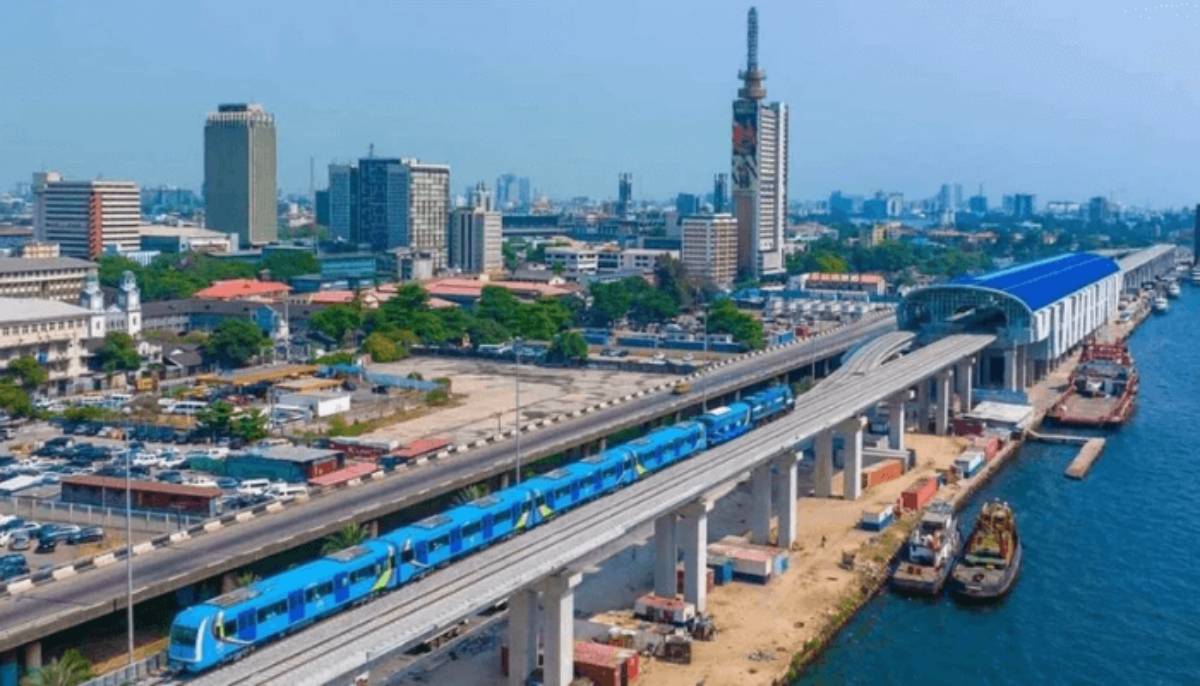
The Blue Line and Red Line rail corridors are transforming residential demand patterns across Lagos. Megastar Magazine's February 2026 analysis of the Lagos property market reported that developers, agents, and urban planners are recording increased land acquisition, faster off-plan sales, and measurable price adjustments in neighbourhoods within reach of rail stations.
In Yaba, Ikeja, and Oshodi, proximity to rail stations is becoming a direct pricing factor. The Africanvestor's early 2026 Lagos forecast identifies these rail-connected Mainland nodes as among the top areas for price growth in the city, with projected appreciation of 10% to 15% in 2026 alone.
What this means for investors: The Nigeria real estate market in 2026 rewards investors who buy in the path of active infrastructure before prices fully adjust. Ibeju-Lekki, the Lekki-Epe corridor, rail-adjacent Mainland areas, and the Ajah-Abraham Adesanya zone all carry active infrastructure catalysts with verified price data to support the thesis.
Force Two: The 2027 Election and What It Means for the Market Right Now
No honest assessment of Nigeria property investment in 2026 can ignore the political calendar. Nigeria goes to the polls in 2027, and pre-election years carry a documented pattern of affecting how capital moves in the property market.
Ahead of the 2023 general election, high inflation and policy flux contributed to a 20% to 30% dip in foreign real estate investment
Nigeria Housing Market's January 2026 outlook identifies three pricing scenarios for the year. A base case assumes gradual macroeconomic stability and continued urban demand. An upside case is driven by stronger currency conditions and consistent policy delivery. A downside case is triggered by macroeconomic or political disruption, which the 2027 election cycle could accelerate if campaign season generates policy uncertainty or public spending volatility.
There is, however, a counterpoint worth noting. Political spending ahead of elections has historically funnelled significant capital into premium residential real estate, particularly in areas like Ikoyi and Lekki Phase 1, as political actors seek to park wealth in liquid, appreciating assets. This creates short-term price stimulus in the luxury segment that investors tracking the pattern can work with.
For most residential investors, the practical read is straightforward. Mid-market properties in areas driven by genuine end-user demand and infrastructure access are less exposed to election cycle volatility than government-dependent commercial projects or speculative luxury plays. A five-year holding horizon absorbs the noise of any single political cycle, and the structural demand fundamentals in Lagos and Abuja do not change based on who wins an election.
What this means for investors: The election is a real risk factor but not a reason to avoid the market. It is a reason to be selective, focus on mid-market residential assets with genuine demand, and avoid projects whose returns depend on government policy continuity.
Force Three: Demand That Simply Will Not Slow Down
Beneath both the infrastructure story and the election noise sits a demand picture that is structurally different from most property markets in the world. The Nigeria real estate market is not demand-driven because of economic cycles. It is demand-driven because of demographics and mathematics.
Nigeria's urban population is growing by roughly 4% annually, adding millions of new city residents each year. Lagos alone absorbs between 6,000 and 10,000 new residents every day. The national housing deficit sits between 22 and 28 million units, with Lagos alone facing a shortfall of 3.4 million units per the Roland Igbinoba Real Foundation's July 2025 State of Lagos Housing Market Report.
Annual housing delivery in Nigeria falls far short of what would be needed to meaningfully close this gap. Nigeria Housing Market notes that demand continues to significantly outpace supply, sustaining upward pressure on both prices and rents.
Rental inflation in Lagos, is structurally disconnected from headline inflation, meaning that even as Nigeria's general inflation rate fell from its 34% peak to around 14% to 16% by late 2025, rent levels were not retreating.
Diaspora capital adds a further layer of demand that is not dependent on domestic income levels. Additionally, diaspora investors now account for up to 70% of capital inflows into Nigeria's premium residential segment, with prime Lagos prices frequently quoted and negotiated in US dollars.
What this means for investors: Demand in the Nigeria real estate market is structural, not cyclical. It does not switch off during election years, naira weakness, or rising construction costs. It persists because the population creating it does not stop growing. Properties in locations that meet genuine end-user needs, at price points that the available tenant and buyer pool can reach, face very low vacancy risk regardless of what is happening at the macro level.
Where Opportunity Sits in 2026: A location-by-Location Breakdown
The three forces above converge differently in different parts of the market. Here is where the data points most clearly for real investors to purchase in 2026.
Ibeju-Lekki and the Lekki-Epe Corridor The highest appreciation potential in the Nigeria real estate market right now. The convergence of the coastal highway, the Lekki Deep Sea Port, the Dangote Refinery, and the Lekki Free Trade Zone creates a multi-decade economic growth story. The Africanvestor projects 100% to 150% cumulative price growth over five years. Entry prices are still accessible relative to the growth thesis, but the coastal road effect is moving fast.
Ajah and Sangotedo The sweet spot for investors who want both rental income and capital appreciation without frontier-level infrastructure risk. The Fourth Mainland Bridge is unlocking value. Rental yields run 6% to 8% gross according to The Africanvestor's early 2026 data. New housing estates are delivering modern mid-market stock with strong tenant demand. April 2026 data from Megastar Magazine confirms the Lekki-Ajah corridor as one of the two primary focal points for new-build activity and investor interest in Lagos.
Yaba and Rail-Adjacent Mainland Nodes Best gross rental yields in Lagos at 8% to 10%, driven by tech sector employment, university demand, and improving rail connectivity. Lower entry prices than Island locations with a credible appreciation thesis as rail access reduces the premium on Island proximity.
Lekki Phase 1 More expensive entry but strong and consistent demand from corporate professionals and expatriates. Gross yields of 5% to 7%, capital appreciation of 15% to 20% projected for 2026 according to The Africanvestor. The most liquid resale market in Lagos for investors who want a reliable exit option.
Abuja: Katampe Extension, Jabi, and Guzape For investors looking beyond Lagos, Abuja's structured planning and government-anchored demand make it a lower-volatility market. Katampe Extension and Jabi are recording the fastest price growth in the FCT according to Megastar Magazine's April 2026 analysis, driven by proximity to commercial hubs, organised layouts, and sustained professional demand. The Africanvestor projects 15% to 20% price growth for these areas in 2026.
The Investment Verdict for 2026
The Nigeria real estate market in 2026 is not a market for passive investors who buy anywhere and wait. It is a market for investors who understand that infrastructure alignment, genuine demand, and disciplined entry pricing are the three variables that determine whether property returns compound or stall.
The structural case for Nigerian real estate has never been clearer. The demographic pressure is unmistakable. The infrastructure investment is the most significant in decades. And the macroeconomic environment, while not perfect, is measurably more stable than 2023 or 2024.
The risks are real too. Construction costs remain elevated. Election-cycle uncertainty is building. And the gap between gross and net rental yield in Lagos means that sloppy cost planning can turn a promising investment into a disappointing one.
The investors who will do best in 2026 are those who combine the right location, a verified developer, clean documentation, and a holding period long enough to let the infrastructure thesis play out fully.
Invest With Confidence Through BALL
Understanding the Nigeria real estate market in 2026 is the first step. Executing the right investment is the second.
At BALL, every listed property is fully verified with complete documentation including Governor's Consent and Certificate of Occupancy, and has passed structural integrity checks. Flexible payment plans mean you can enter the market and position in the right corridor without needing the full purchase price upfront.
Whether you are a Lagos-based investor, a diaspora buyer, or making your first property purchase, BALL removes the documentation and developer risk that turns too many Nigerian property transactions into cautionary tales.
Visit www.ballers.ng today to explore verified properties across Lagos and start building your investment in one of Africa's most dynamic property markets.